Titanium Tube Buying Guide
Tube is the highest-volume titanium product and the easiest to mis-order. This guide fixes terminology, gives the decision rules, and hands you the RFQ template.
Tube vs Pipe: What Buyers Actually Mean
Tube: OD-controlled, wall specified, sizes in mm/inch OD × wall. Pipe: NPS nominal, schedule wall. "Titanium pipe for my condenser" almost always means B338 tube. We quote by OD × wall × length regardless of which word you use.
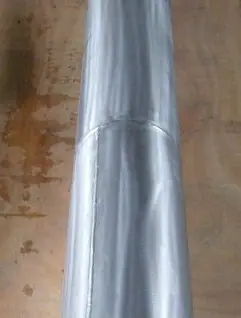
Seamless vs Welded Decision
| Choose seamless when | Choose welded when |
|---|---|
| bending tight radii, severe forming | straight runs, consistent wall needed |
| high pressure with cyclic duty | large OD thin wall at best cost |
| code/standard forbids welded | standard allows welded and docs say welded |
Commonly Ordered OD × Wall Sets
25.4 × 1.5 (exchanger staple) · 12–20 × 0.8–1.5 (instrument, small coolers) · 38–127 × 1.2 (marine/chemical runs) · square/rect structural sections from the fittings family. Yours will be in the band — send the exact set.
Testing Explained
Hydrostatic: pressure-proof every tube or sampled lot. Eddy current: 100 % volumetric surface/sub-surface scan on drawn tube. Ultrasonic: thick-wall volumetric. Each is a production-base operation performed to your ordered standard; the test you buy becomes the record you receive.
Length Tolerance & Ends
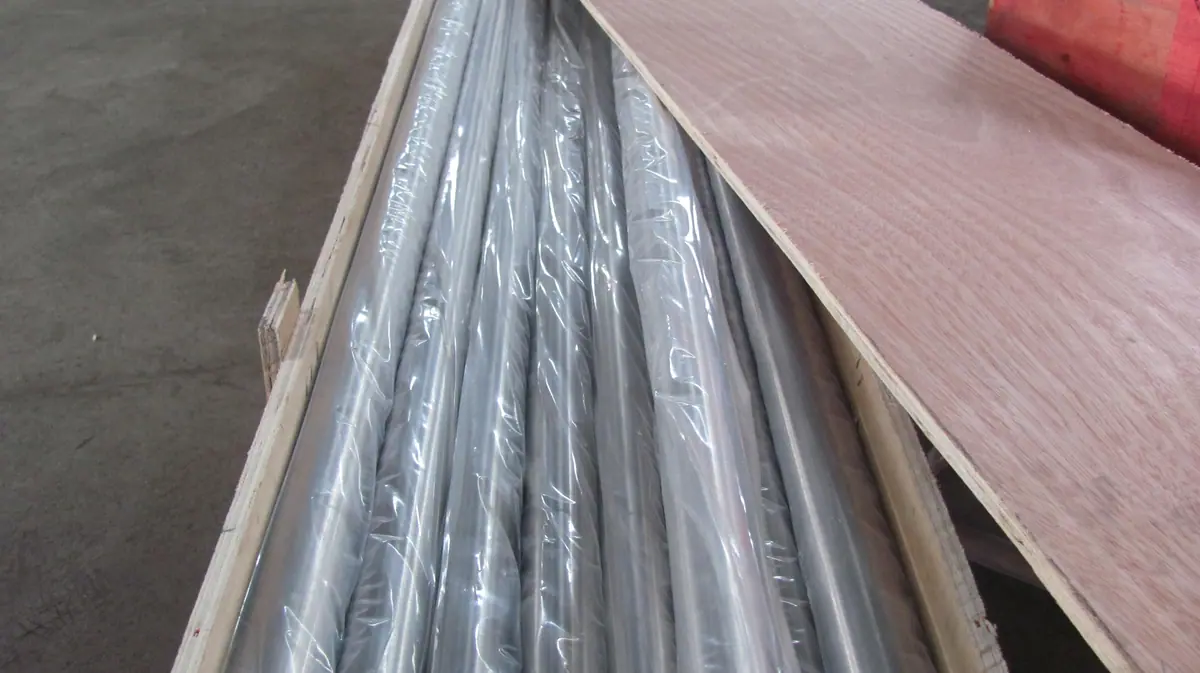
Cut lengths ship with mill-end tolerance unless you spec machining; plain, polished or bevelled ends, and plug every end for sea freight — tell us how the tube will be welded.
Theoretical Weight per Metre
density ≈ 4.51 g/cm³ (Gr1/Gr2) · 4.43 g/cm³ (Gr5). Theoretical only — packing and wall tolerance shift actuals.
Send us your schedule and we'll return weights, bundle counts and container fit for free — buyers use that to sanity-check freight.